
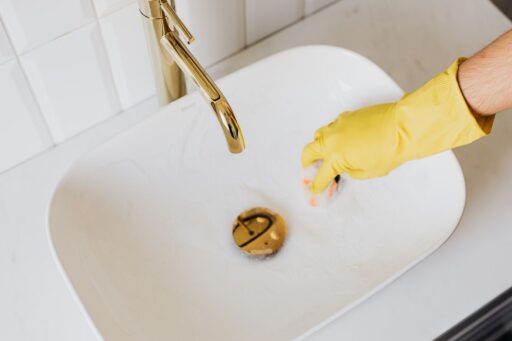
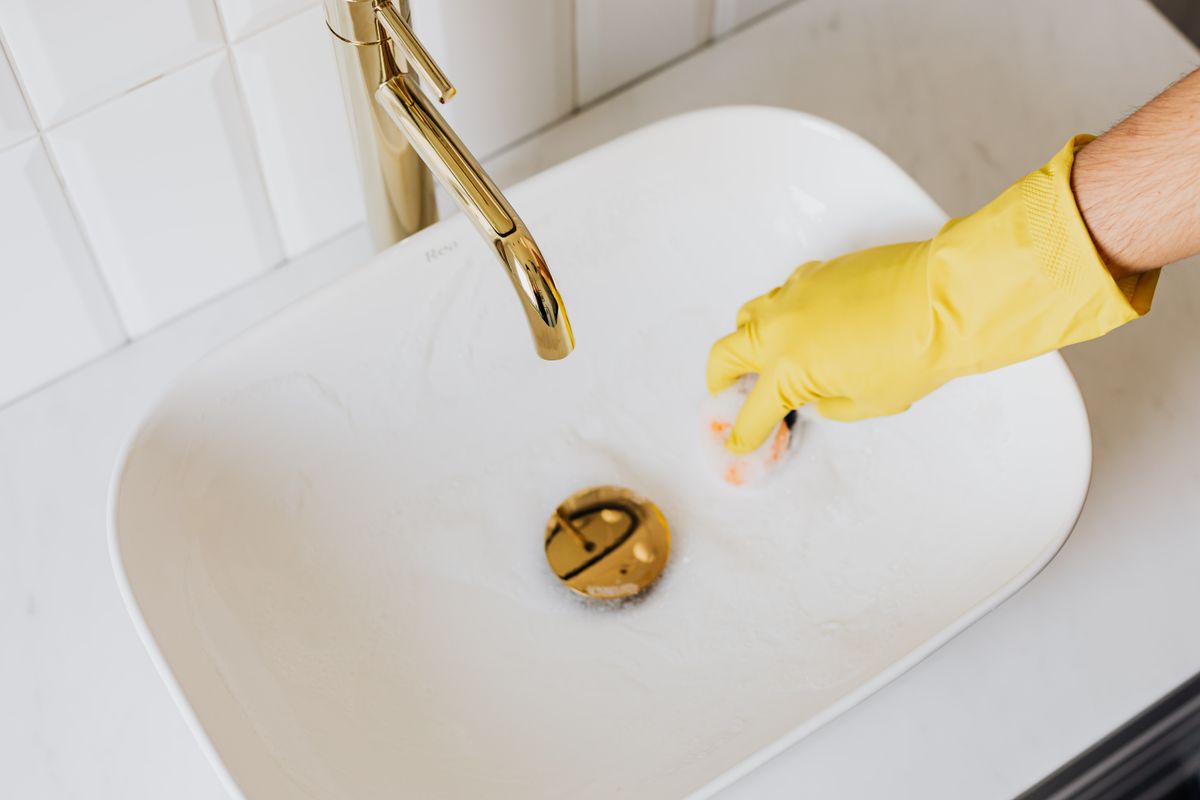

How to clean a sink drain is a common question when water starts draining slowly or unpleasant odors come from the sink. Over time, soap residue, food scraps, grease, hair, and mineral buildup can collect inside the drain and cause blockages.
The good news is that many minor sink drain problems can be handled at home with simple tools and safe cleaning methods. This guide explains easy ways to remove odors, clear buildup, and keep your sink drain working properly.
What You’ll Need to Clean a Sink Drain
Before you start cleaning a sink drain, gather a few basic tools and supplies. Having everything ready makes the process faster, safer, and less messy.
| Item | What It’s Used For |
| Rubber gloves | Protect your hands from dirt, bacteria, grease, and cleaning solutions |
| Bucket or small container | Catch water or debris when removing parts under the sink |
| Old toothbrush or small cleaning brush | Scrub around the drain opening and remove visible buildup |
| Baking soda | Helps loosen grime and neutralize mild drain odors |
| White vinegar | Reacts with baking soda to break down light buildup and freshen the drain |
| Hot water | Flushes away loosened grease, soap scum, and debris |
| Plunger | Helps clear minor blockages caused by trapped debris |
| Drain snake or zip-it tool | Pulls out hair, food particles, and deeper buildup from the drain |
| Microfiber cloth or paper towels | Wipes the sink area clean after cleaning |
| Mild dish soap | Removes grease and residue around the drain opening |
| Flashlight | Helps you check the drain opening or under-sink pipe area more clearly |
For most minor odors or slow drains, baking soda, vinegar, hot water, gloves, and a cleaning brush are enough.
For tougher blockages, a plunger or drain snake may be needed.
How to Remove Physical Drain Build-Up (Mechanical Cleaning)
Mechanical cleaning is one of the most effective ways to remove hair, soap scum, food debris, and other solid buildup inside a sink drain. This method is especially useful when the sink drains slowly or when debris is trapped near the drain opening or inside the P-trap.
Method 1: How to Clean a Sink Drain With a Drain Snake
- Remove the sink stopper if it blocks access to the drain.
- Insert the drain snake slowly into the pipe until you feel resistance.
- Rotate the handle while gently moving the snake back and forth to hook, break up, or loosen the clog.
- Carefully pull the snake out and remove any debris attached to it.
- Run hot water through the drain to flush away remaining buildup.
Avoid forcing the drain snake too hard, as this may damage the pipe or push the clog deeper.
Method 2: How to Clean the P-Trap
If the blockage is located in the curved pipe beneath the sink, cleaning the P-trap may solve the problem.
- Place a bucket and towel underneath the P-trap to catch water and debris.
- Loosen and remove the trap carefully.
- Clear out trapped debris by hand or with a cleaning brush.
- Rinse the P-trap if needed.
- Reattach the trap securely.
- Turn on the water and check for leaks before using the sink normally.
>>>> Read more: How To Clean Burnt Pan Easily: 7 Simple Tricks
How to Clean a Sink Drain Using Household Ingredients (DIY Cleaning)
This DIY method is a simple way to freshen a sink drain and loosen light buildup using common household ingredients. It works best for minor odors, slow drainage, grease residue, soap scum, and small food particles near the drain opening.
For larger clogs or hair buildup deeper in the pipe, mechanical cleaning may work better.
- Remove any visible debris from the drain opening.
- Pour about ½ cup of baking soda into the drain.
- Follow with approximately 1 cup of white vinegar.
- Cover the drain with a stopper or plug to keep the reaction inside the pipe.
- Let the mixture sit and fizz for 5–15 minutes.
- Flush the drain thoroughly with hot water to wash away loosened residue.
Avoid using this method right after applying a chemical drain cleaner, as mixing products can create unsafe reactions.
3. How to Clean a Stinky Sink Drain with Commercial Cleaning Products
Commercial drain cleaners and enzyme-based treatments can help when DIY methods do not fully remove odors or light buildup. This method works best for drains that still flow but continue to smell bad.
Start by removing visible food particles, hair, soap residue, and debris from the drain opening, strainer, or stopper. Then flush the drain with hot water to loosen surface buildup.
Next, choose the right product. Enzyme-based cleaners are useful for odor control and routine maintenance, while liquid drain cleaners may help with heavier residue.
Pour the recommended amount into the drain and follow the label instructions for waiting time, water use, and rinsing.
After treatment, flush the drain as directed to remove loosened residue. Always handle commercial drain cleaners carefully.
Wear gloves, keep the area ventilated, and never mix drain cleaners with vinegar, baking soda, bleach, or other cleaning products.
4. How to Prevent Future Sink Drain Clogs and Odors
Preventing sink drain clogs starts with a simple weekly routine.
Run hot water through the drain to help wash away grease, soap residue, and loose debris before they have time to build up.
You should also wipe the drain opening and clean the strainer regularly to remove food particles, hair, and other visible buildup.
Be careful about what goes down the drain.
- In kitchen sinks, avoid pouring cooking grease, oils, coffee grounds, eggshells, starchy foods, paint, or harsh chemicals into the drain.
- In bathroom sinks, keep hair, dental floss, cotton swabs, and personal care products away from the drain opening whenever possible.
For long-term maintenance, use a drain strainer, clean stoppers often, and flush the drain regularly. Small preventative habits can help reduce odors, prevent blockages, and keep your plumbing system working properly for longer.
>>> Read more: How to Clean a Blender Properly with 4 Simple Steps
5. When to Call a Professional
Call a plumber if you have tried several DIY sink drain cleaning methods but the drain is still slow, clogged, or smells bad. The blockage may be deeper in the plumbing system.
Watch for warning signs such as recurring clogs, standing water, loud gurgling noises, sewage-like odors, water backing up into other fixtures, or multiple drains clogging at the same time.
If more than one drain is affected, the issue may involve the main sewer line rather than just the sink. Persistent odors may also point to a venting problem, hidden buildup, or a deeper blockage that requires professional tools.
6. FAQs
How to get rid of black gunk in sink drain?
Remove and clean the stopper first, then scrub the drain opening with a small brush. Pour baking soda and white vinegar into the drain, let it fizz, and flush with hot water. Black gunk usually comes from hair, soap scum, oils, toothpaste, food residue, and bacteria.
What can I pour down my sink drain to clean it?
You can use baking soda, white vinegar, and hot water to clean light buildup and reduce odors. For greasy kitchen drains, dish soap and hot water can also help. Avoid mixing vinegar, bleach, or commercial drain cleaners together.
Can toothpaste cause bad black sludge in sink drain?
Yes. Toothpaste residue can stick to pipe walls and mix with hair, soap scum, body oils, and debris. Over time, this can create sticky black sludge or biofilm inside the drain.
Will Coca-Cola help unclog a drain?
Coca-Cola is not recommended for unclogging drains. Its mild acid is usually not strong enough to remove hair, grease, soap scum, or food clogs. A plunger, drain snake, or hot water method is usually more effective.
What is the best way to clean sink drains?
The best way is to clean the stopper, remove visible debris, flush with hot water, and use baking soda and vinegar for light odors. For slow drains or solid clogs, use a plunger or drain snake.
7. Bottom Lines
Learning how to clean a sink drain can help you prevent odors, slow drainage, and stubborn blockages before they become bigger problems.
With simple habits like removing visible debris, flushing the drain regularly, and using the right cleaning method when buildup appears, you can keep your sink drain fresh and working smoothly year-round.
Follow our blog for more tips on home maintenance and care you can use year-round. See you later!