


A clean microfiber sofa can refresh your living space, but the right method depends on the fabric’s care code.
This guide explains how to clean microfiber couch surfaces step by step, from choosing a suitable cleaner to treating common stains and restoring the fabric’s texture.
Prepare Your Microfiber Couch Before Cleaning
A few quick checks can help you choose the right method and tools for how to clean microfiber couch surfaces.
Check Your Microfiber Couch Cleaning Code First
Look for the care tag before you decide how to clean microfiber couch fabric, usually under a cushion or along the sofa frame.
Upholstery care codes indicate which type of cleaner is appropriate for the fabric.
| Cleaning Code | What It Means |
| W | Use a water-based cleaner |
| S | Use a solvent-based cleaner |
| W/S or S/W | Either water- or solvent-based cleaner may be used |
| X | Vacuum/brush only; don’t apply liquid cleaner |
What You Need to Clean a Microfiber Couch
Gather the basic tools you need for how to clean microfiber couch surface:
- A vacuum with a brush attachment
- Clean white cloths or white paper towels
- A soft sponge
- A soft-bristle brush
- A water-based upholstery cleaner for W-coded fabric
- A suitable solvent-based upholstery cleaner for S-coded fabric
- A small bowl or container for the cleaning solution
How to Clean Microfiber Couch in 6 Steps
These six steps show how to clean a microfiber couch while keeping the process consistent with your couch’s care instructions.
Step 1: Vacuum the Entire Couch
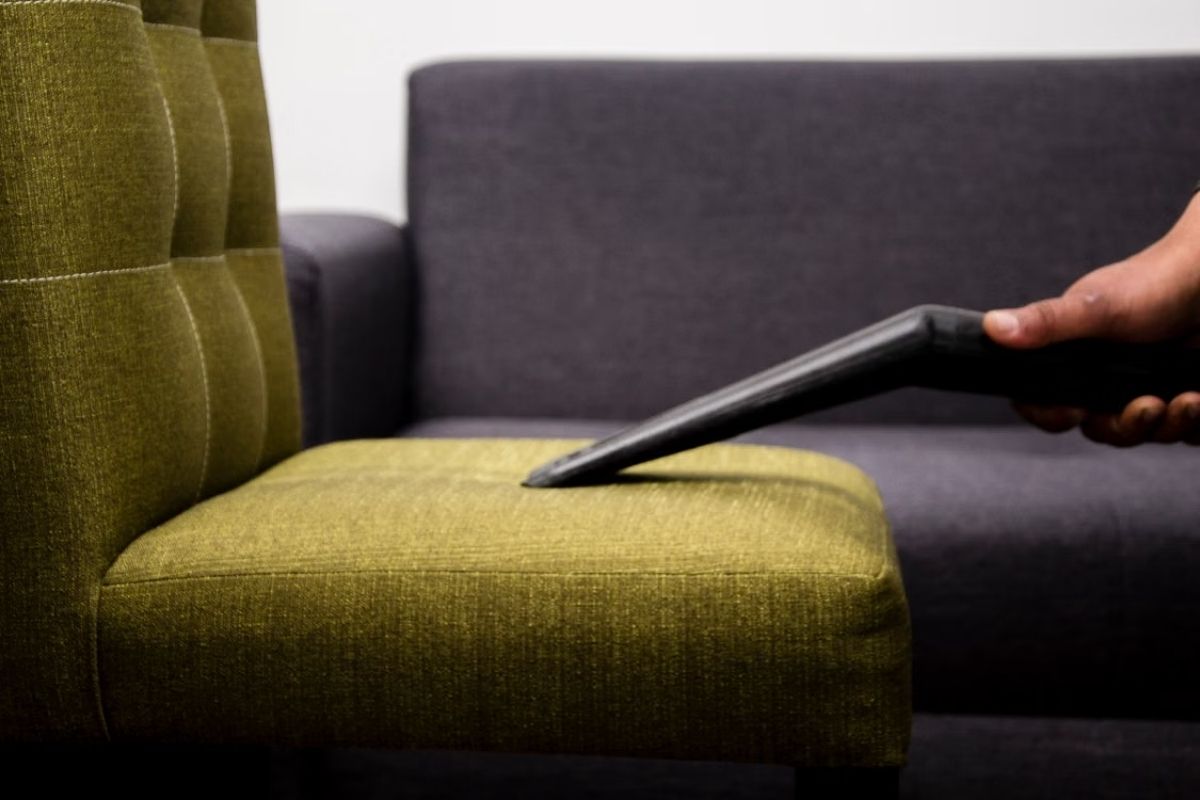
Remove loose cushions and vacuum the seat, back, arms, sides, and crevices. A brush attachment can help lift crumbs, dust, and hair from the fabric surface.
Start with a clean surface before applying any cleaner. Regular vacuuming is also part of basic upholstered furniture care.
Step 2: Test the Cleaner in a Hidden Area
Apply a small amount of the selected cleaner to an area that is not normally visible. Let it dry, then check whether the color and texture remain consistent.
A hidden-area test gives you a practical way to confirm that the product works with your specific upholstery.
Step 3: Prepare the Right Cleaner for Your Code
The care code and product label guide how to clean microfiber couch fabric with the appropriate cleaner.
- For W-coded fabric, use the recommended water-based solution.
- For S-coded fabric, prepare the appropriate solvent as directed.
- W/S fabric can use either approved option, while X-coded fabric should receive no liquid cleaner.
Step 4: Clean One Small Section at a Time
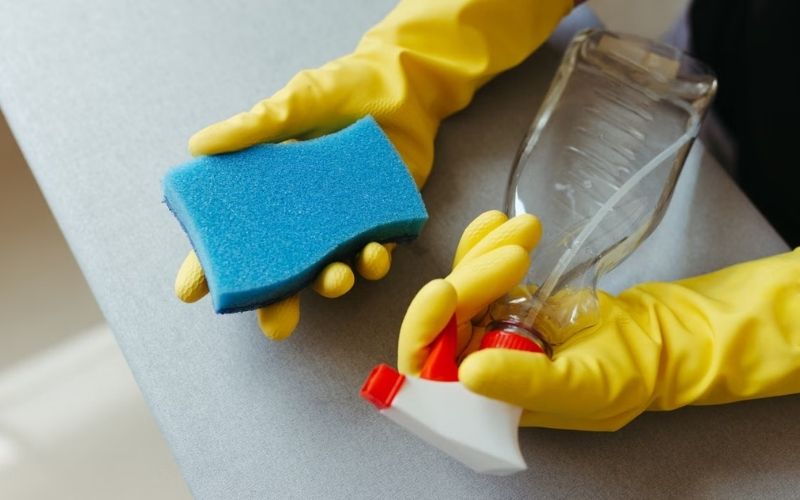
Apply the cleaner to a cloth or sponge when the product directions allow, then work gently across a small area. Use light, controlled motions instead of heavy scrubbing, and move to the next section once the first area is complete.
Use only the amount of moisture needed for the fabric and cleaning method. Upholstery care guidance recommends limited moisture and gentle treatment to help preserve the fabric’s appearance.
Step 5: Let the Couch Air-Dry Completely
Leave the cleaned couch uncovered until the fabric feels fully dry. Open windows or maintain normal room airflow if practical.
Wait until the upholstery is dry before putting cushions and throws back in place. This also gives you a clear view of the fabric before the final brushing step.
Step 6: Brush the Microfiber to Restore Its Texture
Once the fabric is dry, use a clean, soft-bristle brush to gently brush the surface in a consistent direction. This can help lift the pile and restore a more even texture.
This final step is also useful when you need to know how to clean microfiber suede couch fabric and other pile fabrics after cleaning.
>>> You might be interested in: How to Clean Leather Couch: Real, Faux, and Natural Methods
How to Remove Common Stains From a Microfiber Couch
To understand how to spot clean microfiber couch stains, identify the stain type first, then use a method that fits the couch’s care instructions.
Food and Drink Stains
For food or drink stains, spot clean a microfiber couch by removing solids first and blotting spills as quickly as possible. Use a spoon or other blunt tool to lift away food particles without rubbing them deeper into the fabric.
Blot liquid with a clean white cloth or paper towel, working from the outside of the stain toward the center to help prevent spreading. Then apply only a cleaning solution that is compatible with the couch’s fabric care code.
Avoid rubbing or scrubbing the stain, as this can push residue deeper into the microfiber and make the affected area more noticeable.
Grease and Oil Stains
Blot excess oil without rubbing it into the fabric. For upholstery that permits solvent cleaning, use a suitable upholstery or dry-cleaning solvent according to its label and test it on a hidden area first.
Oil-based stains generally require a different approach from water-based spills, so the stain type and care code should guide the method.
Pet Stains and Odors
Blot fresh moisture with an absorbent white cloth, then choose a cleaner that matches the upholstery’s care code. Follow the product directions and allow the area to dry fully.
For pet-related spots, prompt removal of moisture and residue is more useful than simply covering the odor with fragrance.
Common Mistakes to Avoid When Cleaning Microfiber
Knowing how to clean microfiber couch surfaces also means avoiding methods that can leave stains, water marks, discoloration, or a rough texture. Before cleaning, always check the upholstery care code and test any product on a hidden area.
- Using the wrong cleaner: Water-based products can leave rings or damage some microfiber fabrics. Use only a cleaner that matches the couch’s care code.
- Rubbing stains aggressively: Scrubbing can spread the stain, push residue deeper into the fibers, or flatten the fabric. Blot instead.
- Using too much liquid: Oversaturating microfiber can lead to water marks, slow drying, and uneven texture.
- Cleaning only a tiny visible spot: Treating a very small area may leave a noticeable clean patch. Blend the edges carefully when possible.
- Skipping a patch test: Even an approved cleaner may affect color or texture, so test it in an inconspicuous area first.
- Mistaking flattened fibers for stains: Pressure marks may simply need gentle brushing after the fabric dries.
- Ignoring removable-cover labels: Cushion covers can have different washing or drying instructions from the main upholstery.
Let the cleaned area dry completely before judging the final result or applying additional treatment.
How to Keep a Microfiber Couch Clean Longer
A few simple habits can help a microfiber couch stay cleaner between deep cleanings and reduce everyday buildup.
- Use washable throws: Cover high-contact areas, especially favorite seats and places where pets rest.
- Rotate loose cushions: Move and flip cushions regularly to distribute wear, body oils, and dirt more evenly.
- Keep food and drinks off the upholstery: Use a nearby table to reduce crumbs, spills, and sticky residue.
- Vacuum regularly: Remove dust, pet hair, and debris before they settle deeper into the microfiber.
- Blot spills quickly: Treat fresh spills as soon as possible using a method that matches the couch’s care code.
- Limit airborne dust: Close nearby windows during dusty or windy conditions when possible.
These preventive steps make routine maintenance easier and can help preserve the couch’s appearance and texture for longer.
>>> Read more: How to Clean a Refrigerator Properly: 8 Step-by-Step Guide
FAQs
What is the best thing to clean a microfiber couch with?
The best cleaner depends on the couch’s care code. W-coded microfiber can use a water-based cleaner, while S-coded fabric needs a suitable solvent-based cleaner.
Will water ruin a microfiber couch?
Water does not automatically ruin microfiber, but its suitability depends on the care code. W and W/S fabrics can accept water-based cleaning, while S-coded fabric requires a solvent-based method.
Can I use a steam cleaner on a microfiber couch?
Check the manufacturer’s care instructions before using steam. Steam is not suitable for every microfiber couch, so confirm that the upholstery allows this method first.
What should you not clean with microfiber?
Avoid using products or cleaning methods that conflict with the upholstery care code. For X-coded microfiber, do not apply liquid cleaners because the label calls for vacuuming or brushing only.
Conclusion
How to clean microfiber couch fabric depends on the care code, the type of stain, and the cleaner that suits the material.
Check the label first, use the appropriate cleaning method, and let the fabric dry before you restore its texture. With regular care and a few simple habits, your microfiber sofa can stay fresh longer.
Find more practical guides at Zeolearn.