

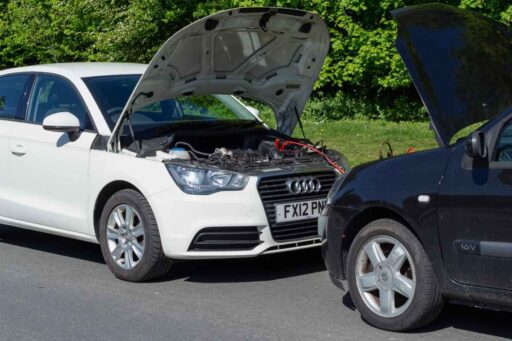

You hop into your car, turn the key or press the start button, and nothing happens except a few clicks or dim dashboard lights. A dead battery can ruin your schedule, but it doesn’t always mean you need a tow truck.
Knowing how to jumpstart a car can get you back on the road in minutes, provided you do it safely. This guide walks you through every step, explains what to do if you’re alone, and helps you avoid mistakes that could damage your vehicle.
What You’ll Need Before Jump-Starting a Car
Get everything you need ready and check that it’s safe before starting how to jumpstart a car.
Essentials
- A set of jumper cables
- A second vehicle with a healthy battery or a portable battery booster
- Safety gloves and eye protection (recommended)
Before you begin
Take a minute to prepare properly.
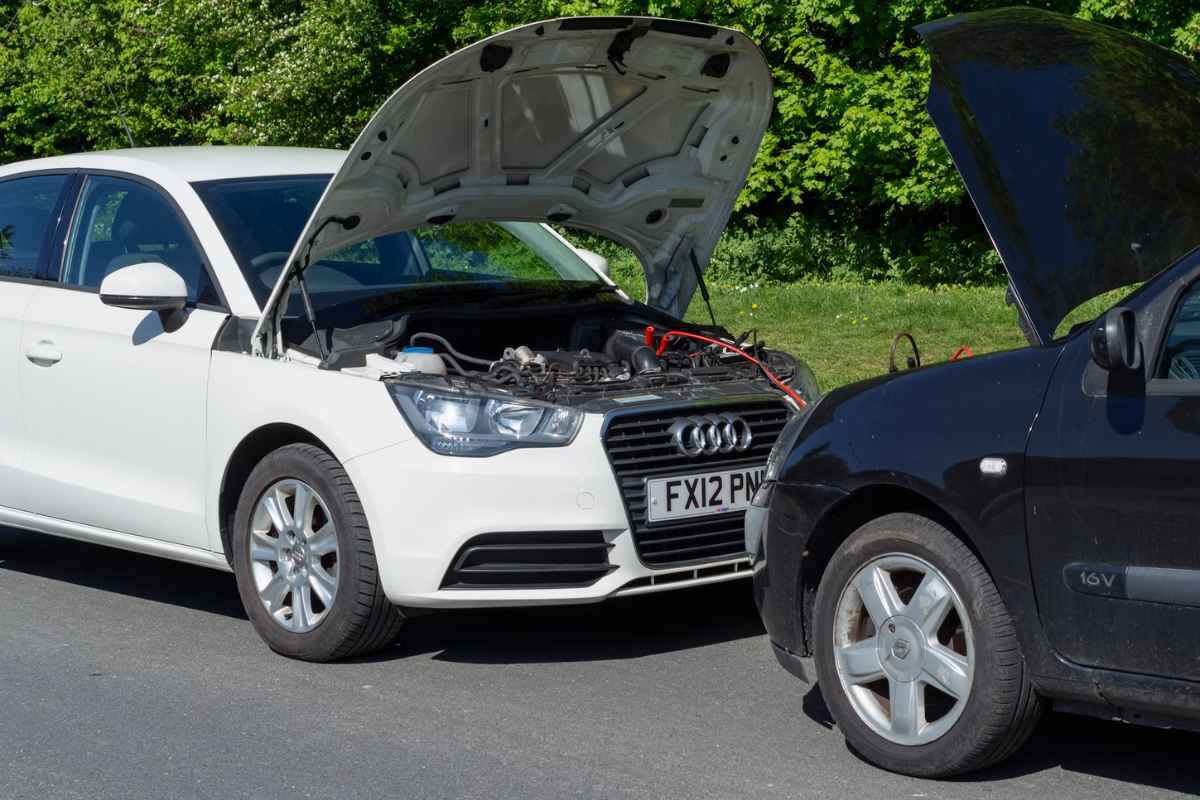
- Position the vehicles within cable range, but leave enough space so they don’t make contact.
- Turn off both engines completely.
- Set the parking brakes.
- Confirm both vehicles use compatible batteries, which are typically 12-volt systems for passenger cars.
For instance, if your sedan won’t start in a parking lot, verify the battery voltage before connecting jumper cables to a larger pickup or truck. Most modern passenger vehicles are compatible, but verifying first helps prevent electrical issues.
How to Jump-Start a Car in 6 Steps
Before you begin, make sure both vehicles are safely parked, turned off, and positioned close enough for the jumper cables to reach. Once everything is in place, follow these six steps to jump-start the car safely and correctly.
Step 1: Position the vehicles
Park the donor vehicle close enough so the jumper cables comfortably reach both batteries. Keep the vehicles separated, since touching could create an unintended electrical connection.
Step 2: Identify the battery terminals
Locate the battery terminals on both vehicles.
- Positive (+): Usually marked with a red cover or “+” symbol.
- Negative (-): Typically black and marked with a “-” sign.
Take a moment to identify them carefully before making any connections.
Step 3: Connect the cables using the correct order
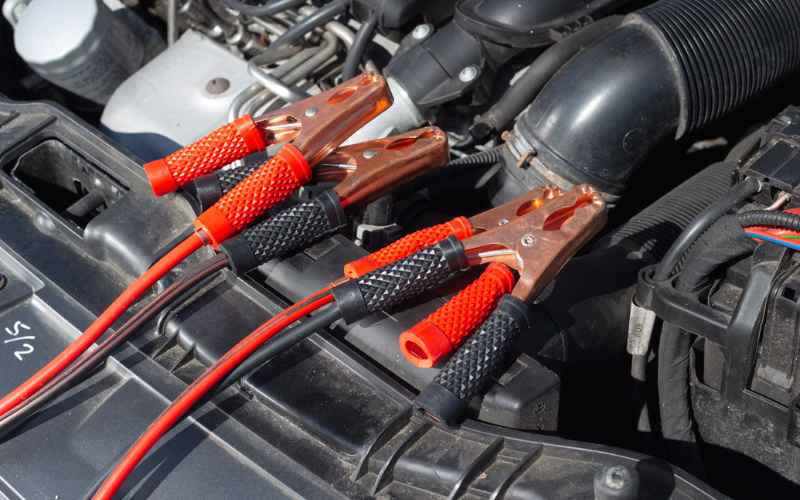
The order of the cable connections is important. For how to jumpstart a car with jumper cables, use the sequence below.
- Secure the red clamp to the positive (+) post of the discharged battery.
- Secure the second red clamp to the donor battery’s positive post.
- Attach the black clamp to the donor battery’s negative (-) terminal.
- Clamp the last black cable to a clean, unpainted metal part of the disabled vehicle, keeping it away from the battery.
Safety tip: Never attach the final black clamp directly to the dead battery’s negative terminal unless your vehicle manufacturer specifically instructs you to do so.
If you’re learning how to jumpstart a car with cables, this connection sequence is the safest approach for most modern vehicles.
Step 4: Start the donor vehicle
Start the assisting vehicle and allow it to idle for several minutes. During this time, electrical current flows into the discharged battery, giving it enough power to crank the engine.
Step 5: Turn on the vehicle that wouldn’t start
Now try starting the disabled vehicle. If it doesn’t start after two or three attempts, stop trying. Continuing to crank the engine may overheat the starter motor or indicate a problem beyond a weak battery.
Step 6: Remove the cables in reverse order
After a successful start, remove the cables in reverse order:
- Begin by taking the black clamp off the metal grounding point.
- Remove the black clamp from the donor battery.
- Remove the red clamp from the donor battery.
- Remove the red clamp from the revived battery.
Completing how to jumpstart a car correctly includes removing the cables safely to avoid accidental short circuits.
>>> Read more: How to Remove Stickers from Glass: Proven Tricks 2026
No Second Vehicle? Here Are Your Options
Sometimes another driver isn’t available. Fortunately, you still have several choices.
How to start a car with a dead battery without another vehicle
If you’re searching for how to jumpstart a dead battery without another car, a portable lithium jump starter is usually the best solution.
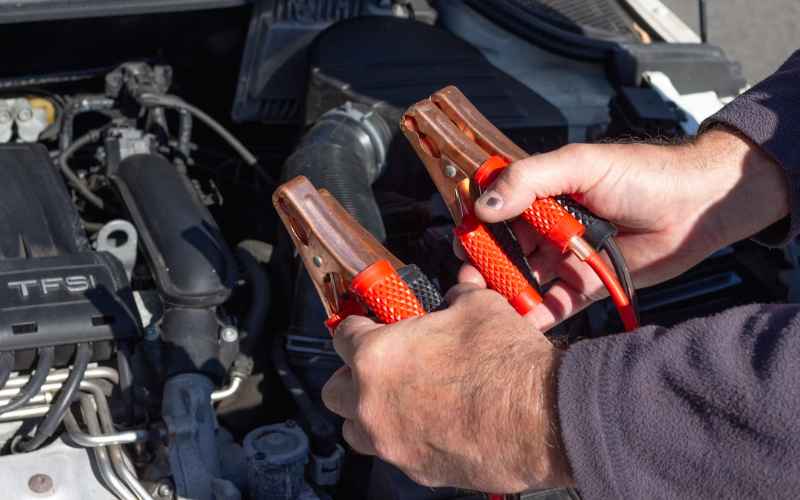
Simply connect the clamps according to the manufacturer’s instructions, power on the device, and start your vehicle. Modern jump starters are compact enough to keep in the trunk for emergencies.
How to jumpstart a car by yourself
A portable jump starter makes it possible without waiting for help. Many models include built-in safety features that prevent reversed polarity or accidental sparks, making them much easier to use than traditional jumper cables.
Using a portable jump starter safely
Before connecting the device:
- Confirm it’s sufficiently charged.
- Attach the clamps securely.
- Keep the cables away from moving engine parts.
- Disconnect the unit after the engine starts.
When roadside assistance is the better choice
If the battery is leaking, swollen, visibly damaged, or your vehicle repeatedly fails to start, professional assistance is the safer option. Likewise, some hybrid and electric vehicles have specialized procedures that differ from conventional gasoline-powered cars.
What to Do After Jump-Starting Your Car
Once the engine starts, the next step is to give the battery time to recover. Drive the vehicle for about 20 – 30 minutes, preferably at normal road speeds, to allow the alternator to put some charge back into the battery.
Try not to shut the engine off immediately after the jump. If the battery is severely discharged or nearing the end of its life, it may not have enough charge to restart the vehicle.
A jump start is also only a temporary solution if there is an underlying battery or charging-system problem. Consider having the battery and alternator tested, especially if the car needs another jump soon afterward.
Pay attention to warning signs while driving. If the battery warning light stays on, the vehicle begins losing electrical power, or the engine stalls again, the problem may involve the charging system rather than simply a drained battery.
Why Your Car Won’t Start Even After a Jump
If you’ve followed how to jumpstart a car correctly and the engine still won’t start, the battery may not be the real issue.
Possible causes include:
- A battery that’s completely worn out
- Loose or corroded battery terminals
- A faulty alternator that isn’t charging the battery
- A defective starter motor
- Blown fuses or electrical faults
- Fuel delivery or ignition problems
For instance, if the engine cranks normally after the jump but still won’t run, the issue likely lies elsewhere rather than with the battery itself. Recognizing this difference helps avoid replacing parts unnecessarily.
>>> Read more: How to Check Oil Level in Car: 4 Simple Step-by-Step Guide
FAQs
What is the correct way to jump start a car?
Connect the positive terminals first, then connect the donor battery’s negative terminal and finally attach the last black clamp to a grounded metal surface on the disabled vehicle. Start the donor vehicle before attempting to start the car with the dead battery.
Do I connect red or black first?
Always connect the red (positive) cables first. The black (negative) connection should be completed last using a grounding point on the disabled vehicle.
Is there a correct order to attach jumper cables?
Yes. Following the proper order minimizes the risk of sparks and electrical damage. The reverse order should also be used when disconnecting the cables.
Can I jump start a car by yourself?
Yes. If you have a portable jump starter, you can safely jumpstart a car by yourself without needing another vehicle.
Conclusion
Learning how to jumpstart a car is one of the most useful emergency driving skills. The process itself is straightforward, but every step from connecting the cables in the correct order to checking the battery afterward plays a role in keeping both you and your vehicle safe.
Most dead batteries are temporary setbacks, not major mechanical failures. By carrying jumper cables or a portable jump starter and understanding the proper procedure, you’ll be prepared to handle one of the most common roadside problems with confidence.