
What is the easiest language to learn? It’s a question many beginners ask before starting their journey. While every language has its own challenges, some are far more approachable due to familiar grammar, vocabulary, and pronunciation.
In this guide, we rank 10 languages by difficulty to help you find the best place to start. Whether your goal is travel, career growth, or personal interest, choosing an easier language can boost your confidence and keep you motivated.
What Is the Easiest Language to Learn: Top 10 Languages
The FSI Language Difficulty Rankings rates every language below as Category I, the easiest classification available. Large communities of English-speaking learners also confirm that these languages are accessible on platforms like Duolingo, Babbel, and language learning forums.
Here is what makes each one approachable.
1. Spanish
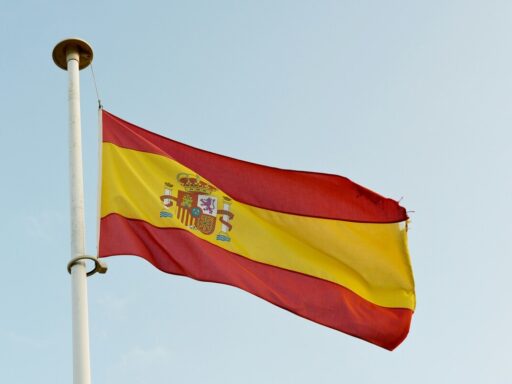
What is the easiest language to learn for English speakers? Spanish is the most commonly cited easiest language to learn for English speakers, and the data backs it up. The FSI rates Spanish at approximately 600 to 750 hours to professional proficiency.
Duolingo consistently reports Spanish as the fastest language for English speakers to reach intermediate level on its platform.
Spanish is also spoken by over 480 million native speakers, giving learners enormous access to media, conversation partners, and immersion opportunities.
2. Portuguese
Portuguese ranks alongside Spanish as one of the easiest languages to learn for English speakers, particularly for anyone with some Spanish already.
The two languages share around 89% lexical similarity, meaning a Spanish speaker can understand most written Portuguese on first exposure. For English speakers, the Latin vocabulary overlap is significant, and the writing system is identical.
3. Spanish (Mexican/Latin American Varieties)
This is also considered one of the top options when people ask what is the easiest language to learn. Worth distinguishing from Castilian Spanish: Latin American varieties – Mexican, Colombian, and Argentine Spanish in particular.
They are often recommended specifically for English speakers because their pronunciation tends to be clearer and more consistent than some regional Spanish dialects.
The s is not dropped at the end of syllables as in some Andalusian or Caribbean dialects, making comprehension easier for new learners.
4. French
French contributed an estimated 30% of modern English vocabulary through the Norman Conquest of 1066. This makes it one of the most vocabulary-rich options for English speakers. Words like government, parliament, justice, art, and cuisine entered English directly from French.
What makes French moderately more challenging than Spanish is its pronunciation. Written French looks very different from how it sounds, with many silent letters and nasal vowels.
>>> Related blog: Best Way to Learn French: Methods, Online Tools, and Abroad Programs
5. Italian
When talking of what language is the easiest to learn, Italian is widely praised by language learners for its musical and phonetic qualities. Like Spanish, it uses the Latin alphabet with consistent pronunciation rules.
Its vocabulary overlaps extensively with English through shared Latin and French roots. Italian grammar has gendered nouns and verb conjugations but fewer irregular verbs than French or Spanish. The FSI also rates learning Italian at 600 to 750 hours.
6. Dutch
Dutch sits at a unique position: it is the easiest language to learn for English speakers among the Germanic family. English and Dutch share a common Germanic ancestor, and the overlap in basic vocabulary is striking. Words like water, hand, arm, storm, and winter are identical or nearly so.
7. Norwegian
Norwegian ranks #7 when discussing what is the easiest language to learn, thanks to its simple grammar and relatively straightforward pronunciation. The two languages share Germanic roots and a large core vocabulary.
Norwegian has no grammatical cases, relatively simple verb conjugation, and is written phonetically. Learning Norwegian gives significant passive understanding of Danish and Swedish due to the high mutual intelligibility among the Scandinavian languages.
8. Swedish
Swedish shares much of the same advantage as Norwegian. Swedish has a musical pitch accent that takes some getting used to, but it does not function like a tonal language in the way Mandarin does.
Sweden’s high levels of English proficiency among native speakers also mean learners in Sweden have abundant opportunities to practice Swedish in real conversation, since many Swedes will happily switch into English and back – which itself becomes a useful immersion tool.
9. Romanian
Speaking of what is the most easiest language to learn, Romanian is the most phonetically consistent of the Romance languages. Its pronunciation closely mirrors its spelling, more so than French or even Spanish.
For English speakers with no Romance language background, the FSI rates Romanian at 600 to 750 hours. It is less commonly studied than French or Spanish, but its phonetic clarity and vocabulary overlap make it genuinely accessible.
10. Afrikaans
Afrikaans is one of the easiest languages to learn for English speakers and is arguably the grammatically simplest language on this list. It is a daughter language of Dutch and shares significant vocabulary with English.
However, it has eliminated much of Dutch’s grammatical complexity. There is no grammatical gender, no case system, and verbs do not conjugate for person or number. The sentences ‘I eat’ and ‘he eats’ use the same verb form.
>>> You might be interested in: What Language Should I Learn? Best Smart Choices 2026
How Long Does It Take to Learn the Easiest Languages?
To help you better understand what is the easiest language to learn, let’s take a closer look at the time required to reach proficiency.
Every easiest language to learn on this list falls into the FSI’s Category I, which means professional working proficiency in approximately 600 to 750 class hours.
At an intensive pace of five hours per day, that is roughly 24 to 30 weeks – about six to eight months. For most self-study learners working one to two hours per day, conversational fluency typically takes one to two years.
Tips to Learn Any Easy Language Faster
If you’re still wondering what is the easiest language to learn, these practical tips will help you learn any easy language faster and more effectively.
- Prioritize speaking from day one: Many learners spend weeks on grammar before attempting a conversation. Speaking early, even imperfectly, accelerates pronunciation and builds real-time processing speed.
- Use spaced repetition for vocabulary: Apps like Anki or the built-in review systems in Duolingo use algorithms that show you words right before you forget them.
- Consume media in your target language from week one: Even if you understand only 10%, listening to podcasts, music, or simple YouTube content trains your ear to the language’s rhythm and sounds.
- Find a conversation partner early: Platforms like iTalki and Tandem connect you with native speakers for language exchange or paid tutoring. Even 30 minutes of live conversation per week accelerates progress noticeably.
FAQs
What Is the Easiest Language to Learn for Absolute Beginners?
For absolute beginners with no prior foreign language experience, Spanish is consistently the top recommendation. Norwegian is a close second for learners who prefer a smaller, less competitive learning community with equally simple grammar.
Both languages allow most dedicated beginners to hold basic conversations within three to four months of daily study.
Which Language Is Quickest to Learn?
Based on FSI data, the quickest language to learn for English speakers is Afrikaans, followed closely by Norwegian and Dutch. All three are the easiest languages to learn in terms of structural simplicity relative to English.
What Is the No. 1 Difficult Language?
There is no single agreed-upon ‘most difficult’ language because difficulty is always relative to the learner’s native tongue. For English speakers specifically, the FSI places Arabic, Mandarin Chinese, Japanese, Korean, and Cantonese in the top difficulty category (Category IV) at approximately 2,200 class hours each.
What Is the Easiest Language to Learn if You Already Speak Spanish?
If you already speak Spanish, Portuguese is the most accessible next language. Spanish and Portuguese share approximately 89% lexical similarity. Italian is the next closest, with around 82% similarity to Spanish.
How Does the FBI Learn Languages Quickly?
The FBI and other U.S. government agencies use immersive, intensive training programs developed in collaboration with the FSI and the Defense Language Institute (DLI). Agents study full-time in five to eight hours per day.
They study in structured classroom environments with native-speaking instructors, often combined with extended periods of in-country immersion.
Bottom Line
What is the easiest language to learn for English speakers often depends on personal factors like interests, location, and motivation. However, Spanish, Portuguese, French, Italian, and Dutch are the most likely options. All five fall into the FSI’s lowest difficulty category, share a large amount of vocabulary with English, and offer abundant learning resources.