
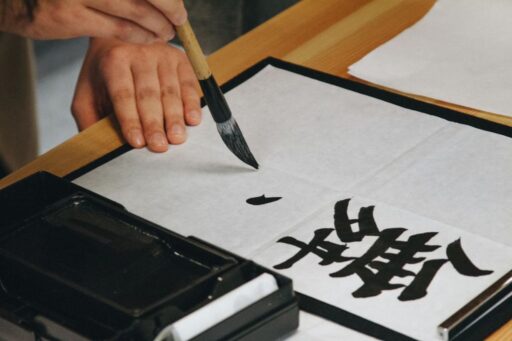
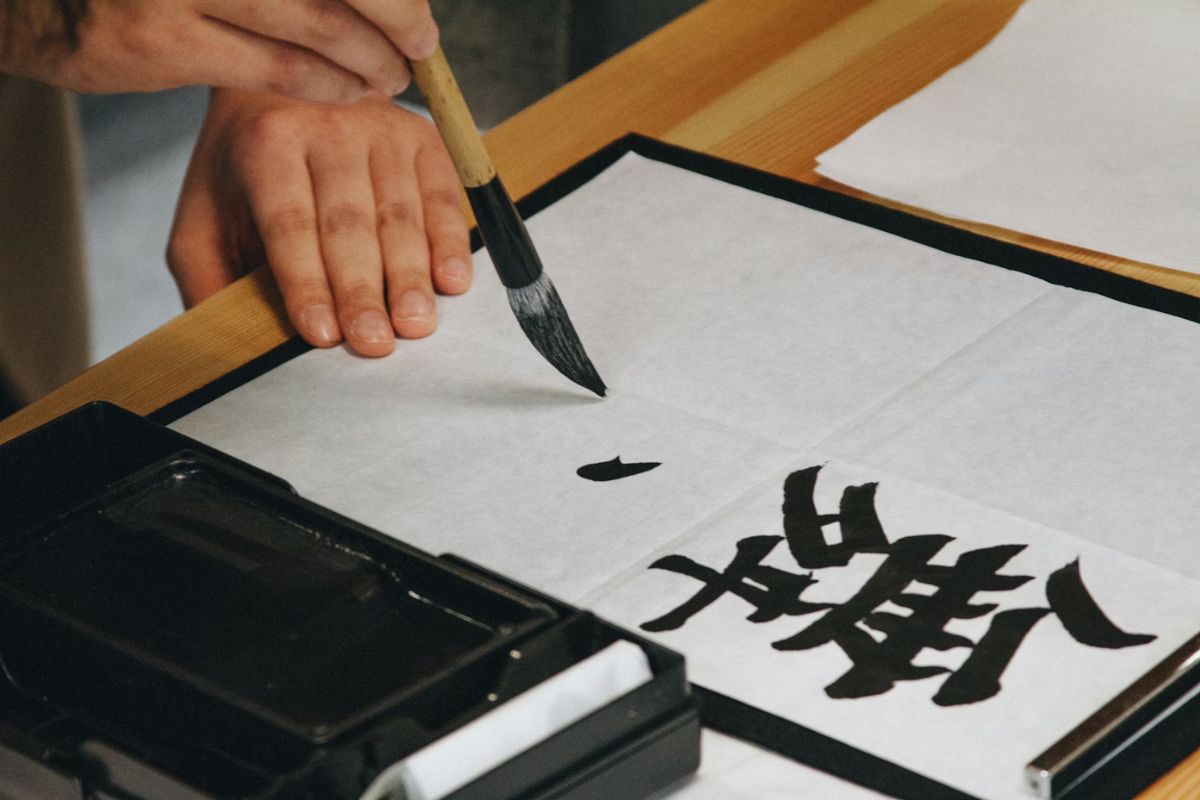

How to learn calligraphy often begins with a simple moment. You see a beautifully written word on a card, a logo, or a notebook, and something about it feels different. The lines are smooth, the spacing is balanced, and every letter seems intentional. Naturally, you want to try it yourself.
1. How to Learn Calligraphy Starts With Tool and Stroke
The foundation of learning calligraphy begins with understanding tools and basic strokes. Calligraphy is not just handwriting. It’s controlled movement. The pen, paper, and pressure you apply all affect the result.
Brush pens, dip pens, or markers each create different styles, but they all follow the same principle: thick and thin strokes. Instead of focusing on letters immediately, start with simple lines. Upstrokes are light, downstrokes are heavier.
This contrast is what gives calligraphy its distinctive look. When you understand this, how to learn calligraphy becomes less about copying and more about control.
>>> Read more: What Language Should I Learn? Best Smart Choices 2026
2. How Hard Is It to Learn Calligraphy in Practice?
Many beginners ask how hard is it to learn calligraphy, especially after their first attempts feel messy. The truth is, calligraphy is not difficult, but it requires coordination and patience.
The early stage feels challenging because you are training both your hand and your eye at the same time. However, once you break practice into small parts, strokes, letters, then words, it becomes manageable.
This shows a clear cause-effect pattern. When practice is structured, progress becomes visible, and frustration decreases.
- Coordination is the main challenge
At the beginning, your hand must control pressure, angle, and movement at once. This makes how hard is it to learn calligraphy feel difficult in the early stage, especially when even simple strokes do not look consistent.
- Difficulty decreases with repetition
As you practice strokes regularly, muscle memory builds. Movements become smoother, and what feels hard starts to feel natural, which shows that progress comes from consistency rather than talent.
- Expectation vs reality gap
Beginners often compare their work to perfect samples. This creates frustration, even though progress is happening step by step, and learning to accept imperfect results is part of the process.
- Method matters more than effort
Random practice slows progress. A structured approach makes how to learn calligraphy writing easier and more efficient, because focused practice helps you improve faster with less effort.
3. How Long Does It Take to Learn Calligraphy?
If you’re wondering how to learn calligraphy, the timeline depends on how consistently you practice. Most beginners see visible progress within a few weeks, while real control and style develop over several months. Here’s how that progression typically unfolds.
First Visible Progress
You can often notice improvement within just a few days or weeks. Basic strokes start to feel more controlled, and simple letters gradually become more consistent and visually pleasing.
Building Consistency
After a few weeks, your control improves. Letters become more uniform, and spacing becomes more natural. This stage is where repetition builds muscle memory.
Long-Term Refinement
Over months, your style develops. You begin to adjust spacing, flow, and composition. This is where how to learn calligraphy shifts from practice to refinement. So, how long does it take to learn calligraphy depends on consistency, but progress happens sooner than most expect.
4. How to Learn Calligraphy Through a Simple Daily System
If you want a practical approach to learn how to write calligraphy, the key is building a simple daily system you can follow consistently. Small, focused practice each day leads to steady improvement over time. Here’s a step-by-step way to make that happen.
Step 1: Warm Up With Strokes
Start each session with basic strokes. Practice lines, curves, and pressure control. This prepares your hand and improves consistency.
Step 2: Focus on a Small Set of Letters
Choose a few letters instead of the whole alphabet. Repetition helps you understand form and spacing more effectively.
Step 3: Write Short Words
Combine letters into simple words. This step connects individual skills into practical writing.
Step 4: Review and Adjust
Look at your work and identify small improvements. Adjust spacing, pressure, or alignment. This feedback loop is essential for growth. This system shows that how to learn calligraphy is not about doing more, but about practicing with intention.
>>> Read more: Is Latin Hard to Learn? An Honest Guide for English Speakers
5. FAQs
How to Learn Calligraphy as a Complete Beginner?
Start with basic strokes, use simple tools like a brush pen, and practice consistently. Focus on control before style.
How Hard is It to Learn Calligraphy?
It feels challenging at first due to coordination, but becomes easier with structured practice and repetition.
Why did Steve Jobs study calligraphy?
Steve Jobs studied calligraphy in college, which later influenced the typography and design of Apple products.
What are the 7 basic strokes of calligraphy?
They include upstroke, downstroke, oval, compound curve, ascending loop, descending loop, and entry/exit strokes. These form the foundation of all letters.
Which is better, cursive or calligraphy?
They serve different purposes. Cursive is for speed and everyday writing, while calligraphy focuses on style and visual expression.
Bottom Lines
Learning calligraphy begins with curiosity, develops through control, and evolves into expression. When you understand how to learn calligraphy, progress becomes predictable rather than frustrating. The principle is simple: control leads to consistency, and consistency leads to beauty.